The Importance of Material Selections in Sun Lakes Home Remodeling
Sun Lakes conditions make materials do more than look good
Heat, sun, and how finishes age
In Sun Lakes, the difference between a “nice” remodel and one that still looks sharp five or ten years later is often the material choices you make early. Sun and heat don’t just fade paint, they stress finishes, adhesives, and hardware at a molecular level. A countertop that looks fantastic during the walkthrough can still develop dull spots if it uses the wrong polish or if it’s not sealed properly for Arizona conditions.
Paint systems behave similarly. Interior wall paint may survive a mild climate for years, but in a hotter region, the wrong binder or an incompatible primer can lead to early staining, uneven sheen, or premature scuffing near doorways and high-traffic paths. When people tell me “it looked great at install,” I always ask what kind of sun exposure the room gets, whether anyone plans to add window treatments, and how often the space is cleaned with different products. Those details influence whether you should Phoenix Home Remodeling home remodeling renovation Sun Lakes choose scrubbable finishes, stain-resistant coatings, or a different sheen level altogether.
Moisture control in kitchens and baths
Kitchens and bathrooms are where material selection turns into performance. Sun Lakes homes often experience daily temperature swings, and even small gaps in water management can become bigger problems over time. Under-cabinet surfaces, shower waterproofing, grout selection, and ventilation all interact. If a builder uses “standard” materials that are only appropriate for cooler climates, you might see issues such as grout discoloration, caulk breakdown, or swelling around sink bases.
The practical takeaway is that a remodeling plan should consider how your selected materials will handle real use. Will you do heavy cooking and wipe-downs? Do you have kids or guests who use the shower with different habits? Are there pets that track moisture onto tile or flooring? Your selections should match your lifestyle, not just your aesthetic.
Flooring choices shape comfort, safety, and maintenance
Tile, luxury vinyl, and engineered wood trade-offs
Flooring is one of the most visible parts of home remodeling, but it is also a long-term decision with daily consequences. In Phoenix-area homes, including Sun Lakes, floor materials deal with thermal expansion and contraction. That’s not a theoretical issue. You can feel it when a floor is installed PHR contractors with the wrong underlayment, insufficient expansion allowance, or an adhesive that does not tolerate heat.
Tile remains a popular option because it handles moisture and resists stains. However, you still need to think through grout color and grout type, because grout selection affects how noticeable discoloration becomes over time. Also, tile hardness can be tough on standing comfort. If you do long cooking sessions, you may prefer a warmer feel underfoot, such as a designed underlayment system that supports comfort while keeping your tile installation stable.
Luxury vinyl and similar resilient floors can reduce the “cold” feel of tile and provide a more forgiving surface for everyday movement. They can also be more forgiving with minor subfloor variations. The trade-off is that not all vinyl products are equally heat-tolerant or impact-resistant, and not all click-lock systems perform the same in sun-exposed areas. If your home has a large west-facing window or a room that gets intense afternoon sun, the product’s documented heat performance matters.
Engineered wood brings warmth and visual richness, but it requires careful attention to humidity, sun exposure, and the finish system. If a room is extremely bright and the HVAC cycle causes drying swings, the wrong finish can show wear patterns sooner.
Subfloor prep and installation details
Most flooring problems I see in Phoenix Home Remodeling projects are not caused by the final material alone. They come from the steps before install. Subfloor flatness, moisture testing, proper acclimation, and correct underlayment choice are the difference between a floor that feels solid and one that shifts or creaks.
That is why Phoenix Home Remodeling uses a planning-first design-build process that completes feasibility, material selections, and 3D design before construction begins. When we map the design and then lock the materials, we can plan the prep work around those exact products instead of treating “flooring” as a generic category.
For homeowners, it helps to ask specific questions like, “What is the moisture test plan?” and “How are you handling expansion where flooring meets walls?” If you do not get clear answers, that is a signal to slow down before agreeing to a schedule.

Countertops and surfaces need the right balance of beauty and durability
Quartz, granite, and solid-surface realities
Countertops often become the centerpiece of a kitchen remodel, and it is easy to choose quickly because they look stunning in a showroom. Still, you want Phoenix Home Remodeling Sun Lakes design build to choose for your actual daily routines. Do you place hot pans directly on the surface? Do you use citrus cleaners or abrasive scouring pads? Do you prefer an ultra-matte finish, or do you want low-reflective durability?
Quartz is engineered for consistency and is widely used because it typically resists staining and is easy to maintain when you follow care instructions. Granite can offer dramatic natural patterns, and many homeowners love its unique look in a Sun Lakes kitchen. But granite performance depends on sealing practices, the specific stone type, and your tolerance for natural variation. Solid-surface materials can be appealing for seamless aesthetics and repairability, though the finish and daily care matter.
In Arizona, surface selection also intersects with sun exposure. A countertop is less likely to “fade” like paint, but adjacent materials may age differently, and glare can create the perception of unevenness. Lighting temperature and placement can also change how a surface reads during different times of day. If your kitchen has bright afternoon sun, you may want to test samples under similar lighting before final decisions.
Edges, backsplashes, and the hidden decisions
A lot of the durability story happens below the visible line. Sink compatibility, underlayment around plumbing cutouts, adhesive choice for backsplashes, and how edges are finished all affect whether your countertop system stays clean and tight.
Edge profiles sound like style decisions, but they also influence how likely you are to get chips and how easy it is to clean crumbs and liquids. If you have a family that stacks plates and wipes frequently, edge choice becomes a practical question. Also, backsplash selection is not just about matching the countertop color. It is about what gets sealed, where grout lines land, and how well the system resists daily splashes.
Cabinetry and hardware choices determine how your kitchen functions
Wood, thermofoil, laminate, and finish systems
Cabinet selection is where aesthetics meet long-term usability. In Sun Lakes, kitchens often receive heavy use, and sunlight exposure can change how cabinet finishes appear over time. That means you should consider finish type, coating quality, and how the material handles routine cleaning.
Solid wood cabinets can age beautifully, but they require appropriate care and should be designed with seasonal climate movement in mind. Thermofoil and certain laminates can resist moisture and are easier to maintain, yet the quality of the substrate and the bonding methods are crucial. If cabinet doors are exposed to high heat from nearby appliances or sunlight through windows, some finishes can show wear patterns sooner than expected.
Finish sheen matters too. High gloss looks sleek at first but can show fingerprints, wipe marks, and minor surface imperfections more readily. A satin or matte finish often hides everyday handling better, though it can change how colors “read” with different lighting temperatures.
Drawer systems, pull-out storage, and daily ease
Function is a major reason people feel satisfied after a remodel, even when the final design is conservative. Soft-close hinges, full-extension drawer slides, and pull-out pantry systems can make the kitchen feel effortless. The trade-off is cost and space planning, because better hardware often means you need to design clearances correctly.
When you choose materials, you also choose tolerances. A drawer slide that works perfectly with one side panel thickness might not align cleanly with another. That is another reason detailed planning matters before construction begins.
Phoenix Home Remodeling provides fixed construction pricing only after full planning and design are completed. With cabinetry and hardware, that planning stage is where you prevent surprises like re-engineering due to mismatched dimensions, incompatible hardware specs, or changes that alter the workflow in a way that costs time to correct.
Bathroom materials decide whether you get long-term peace of mind
Tile systems and waterproofing are the real difference
Bathrooms are where material selection becomes personal. A shower that leaks quietly for two years can lead to damaged subflooring and costly repairs, even if the visible tile still looks “fine.” The most important material choices are often not the ones people photograph, like the waterproofing membrane and the details around curb construction, drain components, and sealing transitions.
In a Sun Lakes remodel, waterproofing needs to perform consistently through daily temperature changes. If you choose decorative tile but skip on waterproofing systems and proper installation, you create a mismatch. The tile can look beautiful while the underlying system fails.
Grout choice also impacts longevity. Some grouts are more resistant to staining and have different flex characteristics. In a shower area, flex matters because minor movement happens when the structure heats and cools. Caulk is another decision point. A caulk that is not suited for wet areas can shrink, separate, or discolor, forcing you to revisit the seam earlier than you wanted.
Vanities, lighting, and ventilation materials
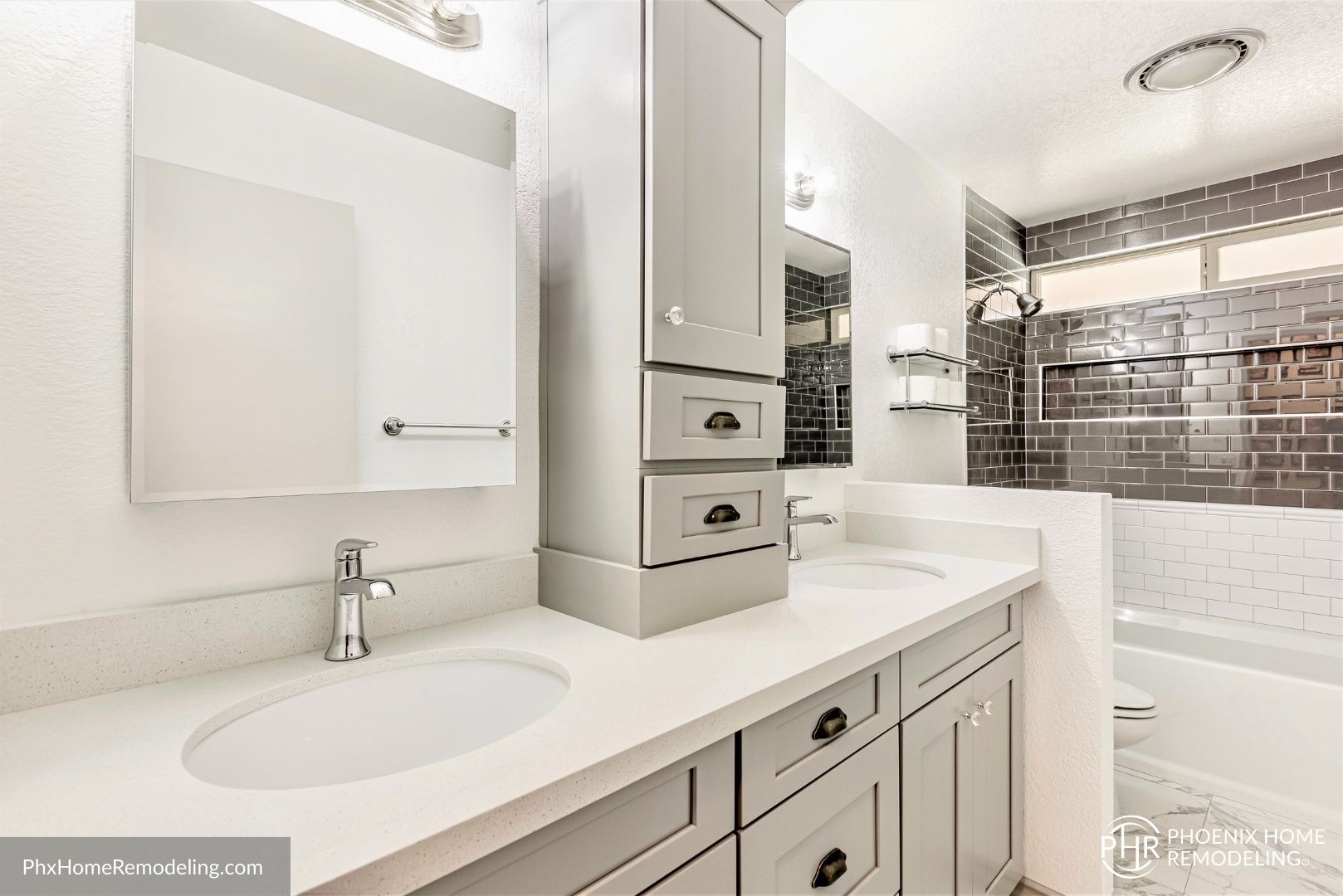
Vanities involve more than countertop and sink style. The cabinet material must resist routine humidity and occasional splashes, and the installation needs to accommodate plumbing and ventilation requirements. Under-sink bases should be designed to handle drips. Even good homeowners cannot avoid every spill, and the best remodels assume real life rather than ideal use.
Lighting and mirrors also affect comfort. In Phoenix-area homes, people often remodel bathrooms to make mornings easier, but poor light placement creates shadows that make grooming frustrating. Choosing appropriate bulbs, fixture placement, and dimmer compatibility can make the bathroom feel more usable. Ventilation is the unsung hero. A fan with adequate capacity and correct ducting helps protect paint, grout, and cabinet components.
If you want a bathroom that stays clean and stable, think of it as a system rather than a collection of surfaces.
Window, door, and paint selections influence comfort and energy use
Exterior performance starts with interior choices
Even if you focus on remodeling interiors, window treatments and adjacent trim materials affect how the entire home feels. A bright room can look gorgeous, but glare can change what finishes you should pick. It can also drive heat load, which then changes how materials behave.
Consider trim and casing materials. Wood trim can expand and contract with humidity. Proper priming and painting help prevent early cracking or peeling at edges. Paint and primer compatibility matters, especially in areas exposed to frequent cleaning or indirect sun.
Choosing paint systems that hold up to real cleaning
Paint selection should reflect maintenance behavior. If you wipe walls often, you need a finish that tolerates repeated cleaning without dulling or scuffing. If you want crisp edges around trim, the primer should bond properly and the topcoat should cure to the intended durability.
Also consider how color temperature changes your perception of materials. Warm paint tones can make wood look richer and make quartz read slightly different. Cool tones can emphasize modern cabinet finishes but may show imperfections more clearly if the wall prep is not adequate. Proper prep is not glamorous, but it is what protects your material investment.
Planning and budgeting protect your material investment
Why early decisions reduce expensive rework
Material selection is not just a shopping step. It is part of a construction strategy. The safest way to protect your budget is to align the design, material specifications, and installation requirements early, before you start tearing out walls.
When that alignment happens, the project moves smoothly. When it does not, you get delays, substitutions, and change orders that often feel avoidable in hindsight.
Transparent process helps you avoid the common traps
Phoenix Home Remodeling integrates in-house design and construction under one coordinated team. That coordination matters when a homeowner chooses a material for appearance but the installer later discovers a mismatch with the intended substrate, the rough opening tolerances, or the expected installation method. Having design and build tied together reduces the “hand-off” gaps that can create problems midstream.
It is also helpful for homeowners to understand where risk usually hides. It can be in the small things, like using the wrong adhesive near heat sources, selecting a grout color that makes everyday staining too obvious, or choosing hardware finishes that do not coordinate with lighting.
A well-run planning process helps you keep your choices consistent from concept through execution.
Proof of track record matters when your choices get technical
Credentials that reflect accountability
Material selection decisions can sound subjective until you face a technical reality, like waterproofing compatibility, flooring heat tolerances, or countertop care requirements. When a company has a track record in the Phoenix area, it usually means their process is repeatable and they know where projects commonly stall.
4.9 rating with 200+ public reviews across major platforms is a sign that homeowners are generally seeing what they expected at the end of the job, not just during the early design meetings.
Service quality also shows up through recognition and customer feedback. Ranking Arizona Top Contractor 2024 is meaningful because it reflects broader market visibility, not a single project story.
Finally, local credibility helps. The Phoenix Review: Best General Contractor in Phoenix connects the work to what people in the community experience, especially around communication, scheduling, and workmanship.
Common material-selection mistakes homeowners can prevent
Treating “samples” as final without context
One of the most common mistakes I see is choosing materials based on a small sample under showroom lighting, then learning too late how they look in your actual Sun Lakes lighting. A quartz slab can look slightly warmer or colder in your kitchen depending on cabinet color and window exposure. A paint color can shift dramatically next to natural stone or under recessed lighting. This is not nitpicking. It is about making sure the final look matches your intent.
Ignoring maintenance habits and product care requirements
Another mistake is assuming all products are equally easy to maintain. Some finishes resist scuffs better, some grouts stain faster, and some hardware needs different cleaning methods to avoid tarnishing. If you choose materials that require careful cleaning but your household uses more aggressive products, you will likely see wear earlier.
Before finalizing selections, it helps to ask for care guidance specific to the exact materials chosen, not generic advice. If you plan to use a certain cleaner for daily wiping, confirm it will not damage the finish. These conversations feel small at the time, but they prevent frustration later.

Skipping the planning details that protect the whole system
Finally, people often underestimate how connected materials really are. Tile layout depends on shower size and drain location. Cabinet installation depends on wall straightness. Flooring depends on subfloor prep and transition details. If you do not plan these relationships up front, you get rework that can compromise material quality and add cost.
That is why Phoenix Home Remodeling uses a planning-first design-build process that completes feasibility, material selections, and 3D design before construction begins. When material selection is tied to feasibility and layout, the “look” you approve is supported by how the materials actually get installed.
If you are planning a Phoenix Home Remodeling project in Sun Lakes, treat the selection phase like a construction phase. It is not about picking pretty items, it is about choosing materials that will perform together, in your home, under your climate, with your day-to-day routines. When that is done well, the remodel feels effortless for years, not just months.